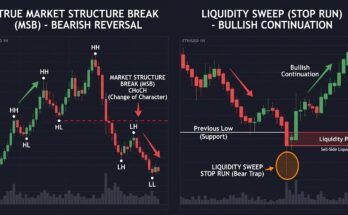
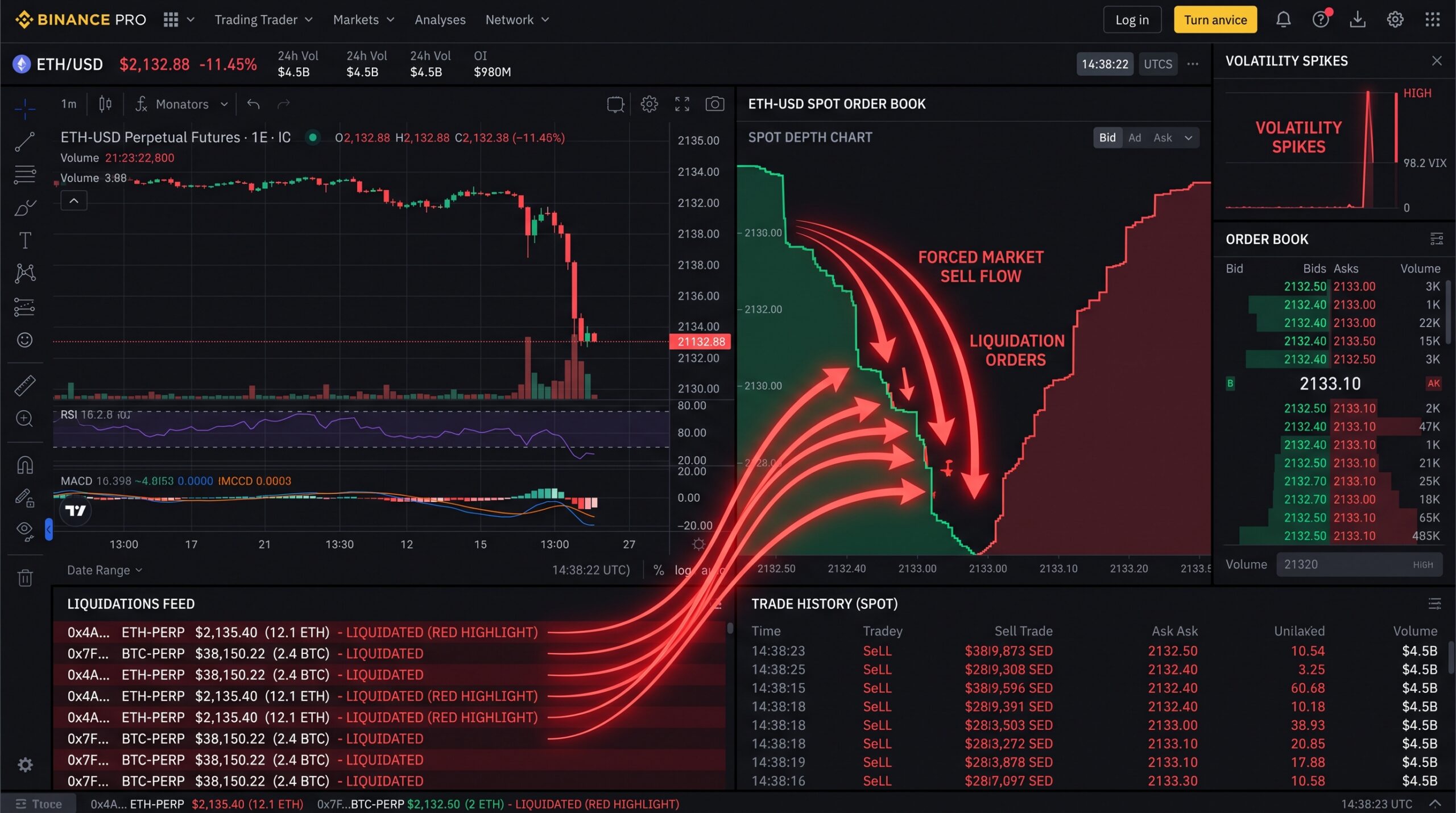
Spot prices suddenly cascade lower even though no major news has hit the market. Order books thin out, liquidations pile up, and the move feels disconnected from traditional buying or selling pressure.
High-frequency activity in crypto derivatives often sits at the center of these events. Perpetual futures, options, and rapid algorithmic trading can amplify moves and transmit stress directly into the spot market. Understanding these mechanics helps you anticipate volatility and avoid getting caught on the wrong side of forced flows.
The Role of Perpetual Futures in Price Discovery
Perpetual futures dominate crypto derivatives volume. Because they never expire, traders can maintain leveraged exposure continuously. Funding rates keep the perpetual price anchored near spot, yet short-term deviations still occur.
When large leveraged positions build up on one side, the market becomes vulnerable. A modest price move against those positions triggers liquidations. High-frequency systems detect the cascade early and trade ahead of or alongside it, accelerating the move.
This activity frequently spills into the spot market. Arbitrage desks and market makers hedge derivatives exposure by buying or selling the underlying asset, creating direct pressure on spot order books.
Forced Liquidations and Liquidity Cascades
Liquidation engines run automatically. Once a position hits the maintenance margin threshold, the exchange closes it at market. In fast conditions, these market orders consume available liquidity and push price further in the same direction.
High-frequency traders monitor liquidation levels across major venues. When they see clusters of stop-loss and liquidation prices nearby, they may position for the cascade. The result is a self-reinforcing move that looks irrational from a pure spot-flow perspective.
Thin spot order books make the effect worse. During these events, even moderate liquidation size can produce outsized price swings because resting liquidity is insufficient to absorb the flow.
Order Book Imbalances and Market Maker Behavior
Market makers provide liquidity on both spot and derivatives venues. When derivatives volatility spikes, many reduce inventory or widen spreads to manage risk. This withdrawal of liquidity appears in the spot order book as thinner depth and larger gaps between levels.
High-frequency strategies exploit these temporary imbalances. Some systems fade extreme moves once liquidation pressure exhausts. Others continue momentum if residual leverage remains. The interaction creates the sharp, two-way volatility typical of crypto during stressed periods.
Watching depth across major pairs during high-volatility sessions reveals how quickly liquidity can disappear and reappear once the forced flow subsides.
Practical Ways Traders Can Respond
Monitor open interest, funding rates, and estimated liquidation maps on major perpetual contracts. Rising open interest combined with extreme funding often signals crowded positioning that can unwind violently.
Avoid placing large spot orders during obvious cascade conditions. Liquidity is poor and slippage increases. Wait for evidence that forced selling or buying has exhausted before committing size.
Use the knowledge defensively. If you already hold a spot position and see leveraged overcrowding on the same side, consider reducing exposure or tightening risk controls. Cascades rarely announce themselves with clean technical patterns.
FAQ
Do derivatives always lead the spot market?
Not always, but during high-leverage liquidation events derivatives flows frequently drive short-term spot price action.
What is a liquidity cascade?
It occurs when forced liquidations consume available order-book liquidity, pushing price further and triggering additional liquidations.
How can I track potential liquidation clusters?
Many analytics platforms publish estimated liquidation levels based on open interest and leverage data across major exchanges.
Should I trade during these high-frequency driven moves?
Most discretionary traders are better off waiting for the forced flow to subside and liquidity to return.
Why do spot prices sometimes recover quickly after a cascade?
Once over-leveraged positions are cleared, selling or buying pressure drops and market makers often step back in, allowing price to stabilize or rebound.
Respect the Derivatives Tail That Moves Spot
High-frequency derivatives activity can dominate short-term crypto price action through funding dynamics, leveraged positioning, and forced liquidations. These flows regularly transmit into the spot market and create cascading moves that appear disconnected from news or traditional order flow.
Track open interest, funding, and liquidation levels as part of your regular market observation. Treat periods of extreme leverage with caution and protect your capital when liquidity conditions deteriorate. The traders who understand these mechanics stop being surprised by sudden cascades and start recognizing them as a recurring feature of the market structure.