Volatile markets punish hesitation and reward discipline. You watch prices swing wildly and wonder whether to buy the dip, sell the rip, or simply stay out. Manual trading in these conditions often leads to emotional decisions and deeper drawdowns.
Automated bots offer a structured alternative. Grid bots and DCA bots rank among the most popular tools for navigating choppy price action. Each approach handles volatility differently, and choosing the right one can mean the difference between steady gains and painful losses. Let’s break down how they work and when each shines.
How Grid Bots Capture Volatility
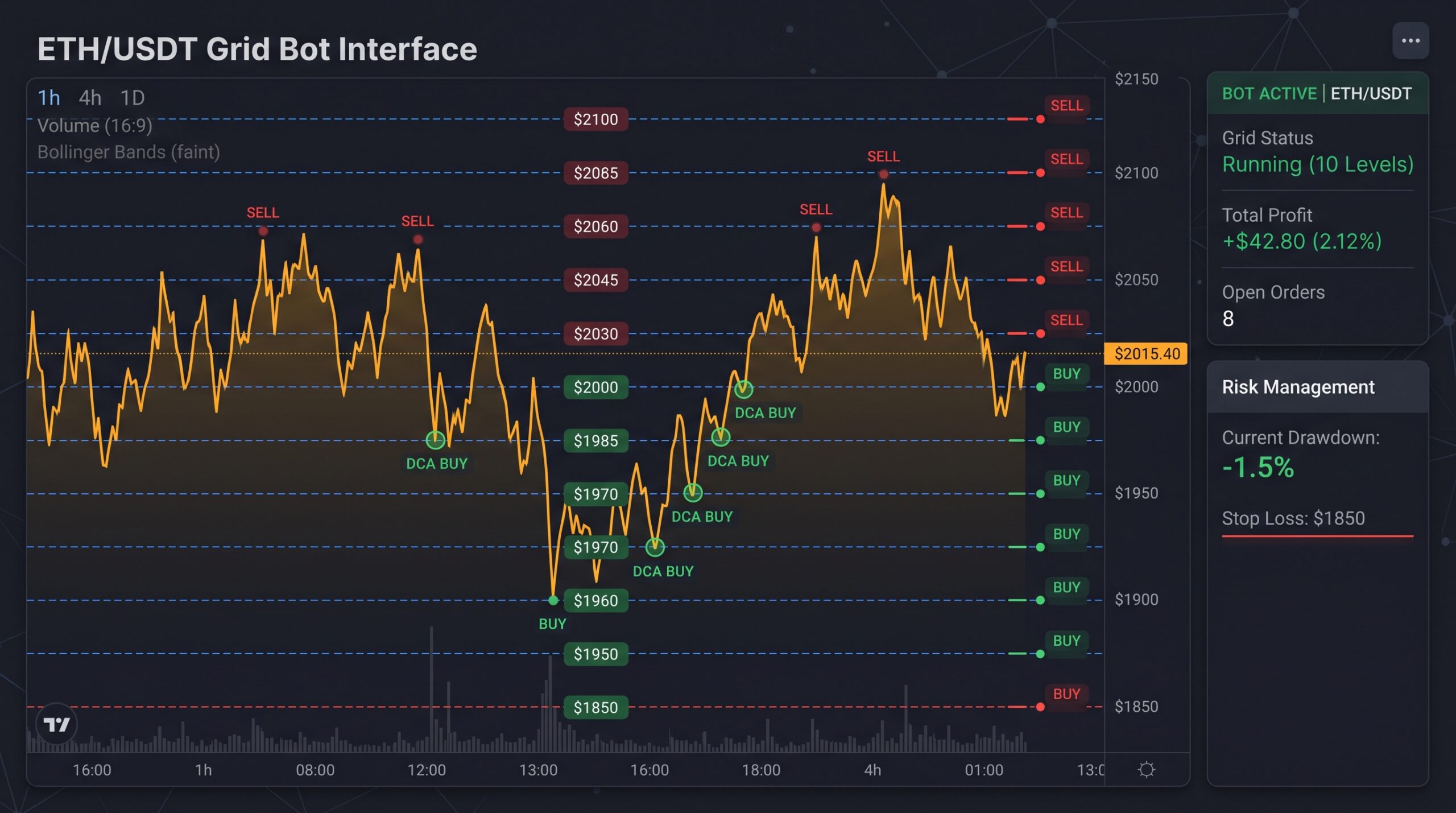
Grid bots place a series of buy and sell orders at predetermined intervals above and below a set price. As the market oscillates, the bot continuously buys lower and sells higher within the defined range.
This structure thrives when price moves sideways or within a broad channel. Every fluctuation becomes a potential profit opportunity. The tighter the grid, the more frequent the trades—but also the higher the risk if price breaks out strongly in one direction.
In my own testing during range-bound periods, a well-configured grid bot generated consistent small wins that added up meaningfully over weeks. The key was setting realistic upper and lower bounds based on recent support and resistance rather than wishful thinking.
How DCA Bots Build Positions Over Time
DCA bots follow a simpler logic. They buy a fixed dollar amount or fixed quantity at regular intervals or when price drops by set percentages. The goal is to average into a position without trying to time exact bottoms.
This method reduces the emotional burden of deciding when to buy. In strong downtrends it accumulates more units at lower prices. In uptrends it still builds exposure gradually rather than chasing.
DCA bots generally experience slower capital deployment than grids. They also tend to hold through deeper drawdowns because they keep buying as price falls. The approach suits longer-term accumulation more than short-term range trading.
Drawdown Risk and Capital Protection
Grid bots can face significant unrealized losses when price trends hard beyond the grid range. All buy orders fill, sell orders sit unfilled, and the position moves underwater until price returns. Proper position sizing and hard stop levels become essential.
DCA bots spread purchases over time, which softens the impact of any single entry. Still, continuous buying into a prolonged decline increases total exposure and potential drawdown. Setting maximum investment caps and pause conditions helps contain damage.
Both strategies demand clear rules for capital allocation. Risking only a small percentage of total portfolio per bot keeps any single failure from becoming catastrophic. Reviewing open positions regularly prevents small issues from growing unnoticed.
Choosing and Combining Strategies in Live Markets
Sideways or mean-reverting markets usually favor grid bots. Trending or uncertain long-term markets often suit DCA approaches better. Many experienced traders run both simultaneously on different pairs or timeframes.
Start with paper trading or very small size to learn how each bot behaves with your specific assets. Track not only profits but also maximum drawdown, time spent in drawdown, and how often the bot requires manual intervention.
Adjust parameters as volatility regimes change. A grid that worked in calm conditions may need wider spacing when markets turn chaotic. A DCA interval that felt comfortable in a mild correction can become aggressive during a sharp selloff.
FAQ
Which bot performs better in high volatility?
Grid bots can profit from frequent swings if price stays within range. DCA bots handle sustained directional moves more gracefully.
Can I lose money with these bots?
Yes. Both can produce losses, especially during strong trends that invalidate the underlying assumptions.
How much capital should I allocate to one bot?
Many traders limit each bot to 5-15% of their total portfolio depending on risk tolerance and strategy.
Do I need to monitor bots constantly?
Regular checks are wise, especially around major news events or when price approaches grid boundaries or DCA limits.
Is it better to run grid and DCA bots together?
Combining them can balance short-term range profits with longer-term accumulation, provided overall risk stays controlled.
Build a Smarter Automated Approach
Grid bots and DCA bots each offer distinct advantages in volatile markets. One capitalizes on oscillation. The other focuses on disciplined accumulation. The real edge comes from matching the tool to current conditions and managing risk with clear rules.
Test both approaches carefully, start small, and track drawdown as closely as you track gains. Automated strategies work best when you remain the thoughtful operator rather than a passive passenger. Refine your setup, respect the risks, and let the bots handle the repetitive work while you focus on higher-level decisions.