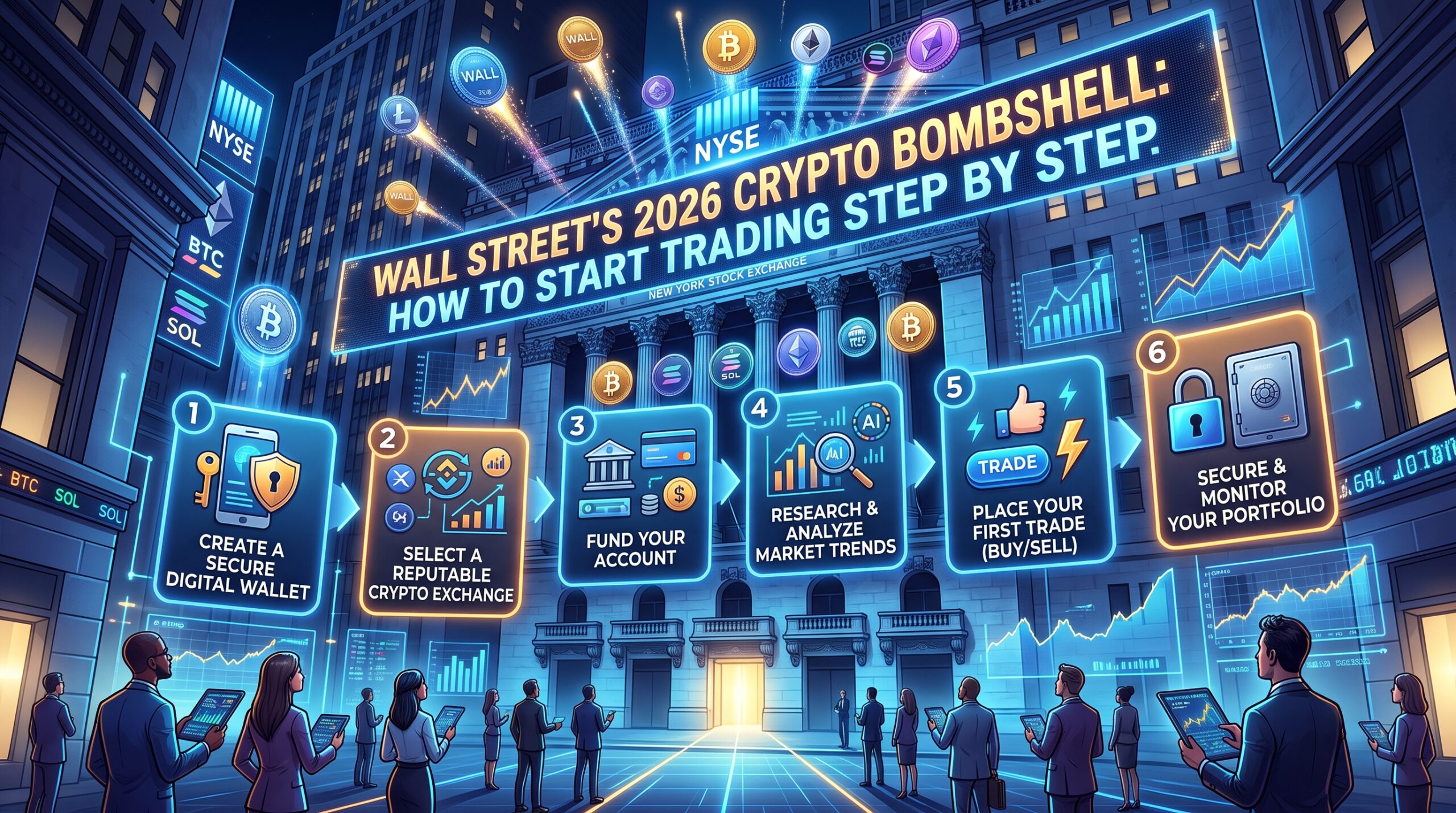
The whispers across Wall Street have turned into an absolute roar. A massive price bombshell is suddenly hurtling toward Bitcoin and crypto, and most retail traders are looking the wrong way. If you’ve been sitting on the sidelines waiting for a sign to start trading cryptocurrency, this shift is the ultimate wake-up call. What we are seeing right now is just the tip of the iceberg.
Navigating this market can feel incredibly overwhelming when you’re staring at fluctuating charts and endless technical jargon. You might worry about entering at the absolute peak or losing your hard-earned capital on a bad trade. That anxiety is completely normal, but staying uneducated is the real risk. Let’s break down exactly how you can position yourself strategically before the market leaves you behind.
Why the Wall Street Price Bombshell Changes Everything
Institutional capital is no longer just dipping its toes into the market; it is flooding the ecosystem. This looming 2026 Wall Street price bombshell is suddenly hurtling toward Bitcoin and crypto, threatening to fundamentally shift how digital assets are valued. When major hedge funds and institutional liquidity desks prepare for a massive structural re-pricing, volatility spikes drastically. For an individual trader, this environment creates an unprecedented window of opportunity if you know how to read the momentum.
Understanding this macro shift is critical because crypto doesn’t move in a vacuum anymore. What starts as a quiet corporate accumulation phase quickly turns into an aggressive retail rally. If you are learning how to start trading cryptocurrency step by step, you must look at what the biggest players are doing behind the scenes. They are accumulating while the public is distracted by short-term noise, proving that we are truly just looking at the tip of the iceberg.
Choosing a Secure, High-Liquidity Trading Platform
Your first actionable step is selecting where you will execute your trades. Do not just download the first app you see on a social media ad. Look for exchanges that offer deep liquidity, robust security protocols like cold storage, and low maker/taker fees to protect your margins.
-
Centralized Exchanges (CEXs): Platforms like Coinbase, Binance, or Kraken are ideal for beginners due to their straightforward fiat-to-crypto gateways.
-
Decentralized Exchanges (DEXs): Platforms like Uniswap or Uniswap-variants offer direct wallet-to-wallet trading but require a bit more technical know-how regarding slippage and network fees.
Make sure the platform you select supports advanced order types like stop-loss and limit orders. This setup ensures you can automate your risk management right from day one, rather than constantly panicking over live charts.
Setting Up Your Risk Management Architecture
Before you buy a single dollar of Bitcoin, you must establish your risk boundaries. The absolute golden rule of trading digital assets is to never risk more than 1% to 2% of your total trading portfolio on a single position. If you start with a $5,000 account, a single bad trade should never cost you more than $100.
| Strategy Element | Implementation Plan | Purpose |
| Stop-Loss Order | Set automatically at a predetermined technical support level. | Prevents catastrophic capital drain. |
| Take-Profit Target | Locked in at next major resistance level. | Ensures you actually capture gains. |
| Position Sizing | Calculated based on the distance to your stop-loss. | Keeps emotional trading at zero. |
Implementing this structure removes emotion entirely from the equation. The market will be wild, especially as the Wall Street price bombshell plays out, but an airtight risk strategy keeps you in the game long-term.
Mastering the Art of Technical Analysis and Order Types
To trade successfully, you need to understand the basic language of the market: price action and volume. Start by learning to identify basic candlestick patterns, support and resistance zones, and simple moving averages ($SMA$). These indicators tell you where buyers are stepping in and where sellers are dumping their supply.
When you’re ready to execute, ignore market orders unless you are in a massive rush. Market orders fill at whatever price is currently available, which can cost you heavily during high-volatility events. Instead, rely heavily on limit orders, which only execute when the asset hits your exact specified price, giving you total control over your entry point.
Developing a Consistent Trading Psychology
The hidden killer of most trading accounts isn’t a bad strategy; it’s a broken psychological framework. Fear of Missing Out (FOMO) will scream at you to buy when prices are skyrocketing, and panic will scream at you to sell when everything turns red. Successful traders treat the market like a calculated business enterprise, completely detached from greed.
Keep a strict trading journal detailing every entry, exit, and the specific reason why you took the trade. Reviewing this data weekly will reveal your behavioral patterns and help you eliminate costly, impulsive mistakes.
Turning Market Volatility Into Financial Leverage

The crypto landscape is evolving at a breakneck pace, and the upcoming institutional shifts are going to create massive waves. By building a foundation rooted in risk mitigation, technical literacy, and psychological control, you position yourself to profit from these swings rather than becoming a casualty of them.
Don’t let the complexity hold you back from taking your piece of the market. Start by setting up a secure account today, fund it with capital you can afford to practice with, and take your first calculated step into the future of finance.
FAQ
What is the minimum amount of money needed to start trading crypto?
You can actually start with as little as $10 to $20 on most major digital asset platforms. The key is using these small amounts to practice your execution and risk management before scaling up your capital.
How do I protect my trading capital from sudden market crashes?
Always utilize hard stop-loss orders on every single trade you enter. This ensures that if the market takes a sudden, sharp downturn, your position is automatically liquidated at a minimal, acceptable loss.
Is cryptocurrency trading better than forex or stock trading?
Crypto markets offer significantly higher volatility and operate 24/7, creating more frequent trading opportunities. However, this increased opportunity comes with a much higher risk profile compared to traditional stock markets.