
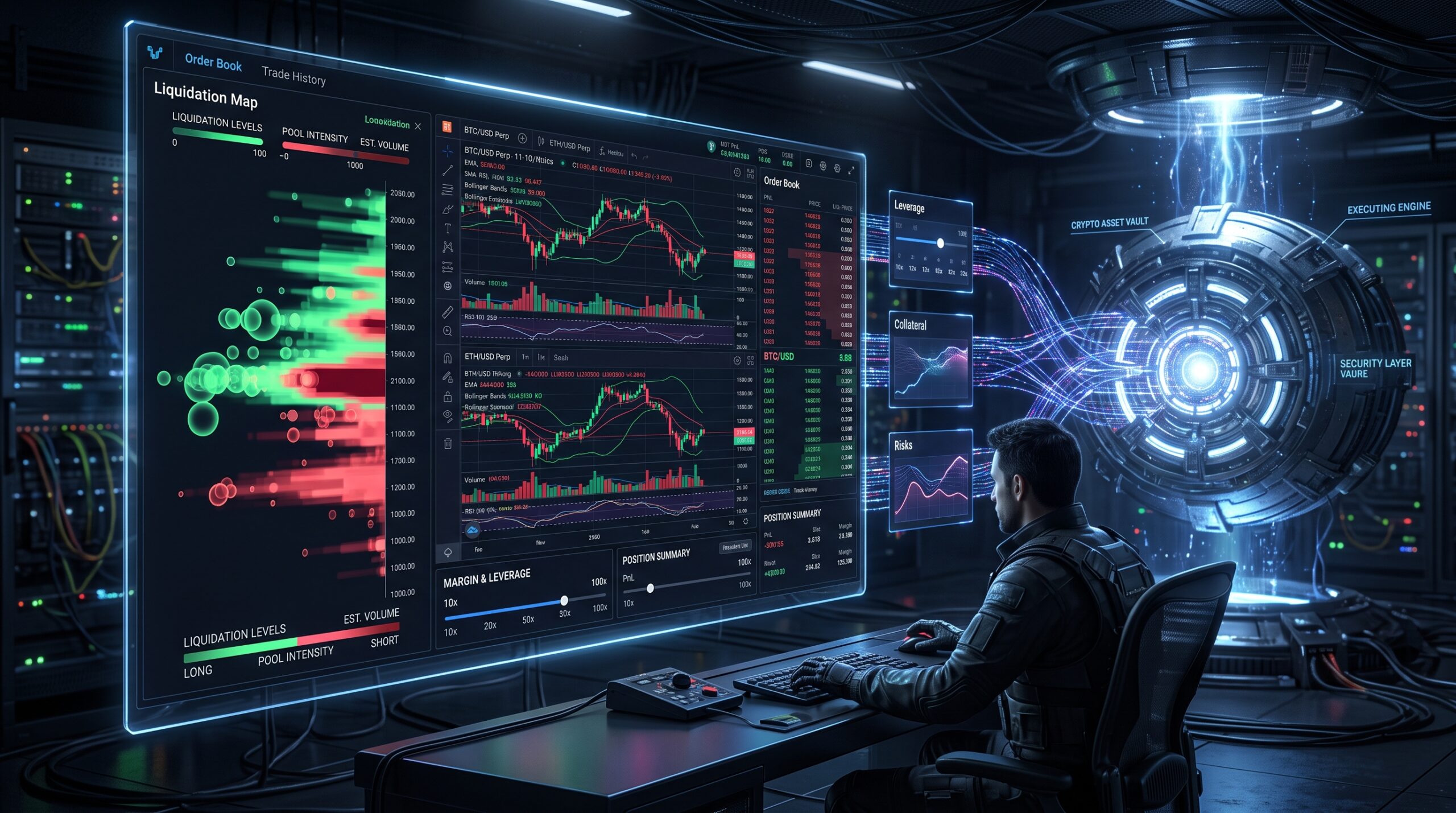
You have likely realized that spot trading is only the tip of the iceberg. While buying and holding is a foundational move, the real “engine room” of the crypto market lies in the deep liquidity of derivatives and the flexibility of margin trading. We have all felt that subtle frustration of being sidelined during a volatile market move because our capital was tied up in a simple spot position that couldn’t capitalize on the downward trend.
When you start leveraging your positions and diving into the altcoin derivatives market, you aren’t just trading assets anymore—you are managing risk, hedging volatility, and actively sculpting your exposure. This isn’t for the faint of heart, but for those ready to move beyond the basics, these advanced tools are the difference between stagnant gains and exponential growth.
Margin Trading: The Double-Edged Sword
Margin trading allows you to borrow capital from the exchange to amplify your buying power. You essentially use your current holdings as collateral to open positions significantly larger than your initial deposit. It is a powerful way to maximize your returns, but you must understand that it simultaneously amplifies your risk of liquidation.
Expert Insight: Never use cross-margin if you are still learning the ropes. In cross-margin mode, the exchange can draw from your entire account balance to prevent liquidation, which puts your entire portfolio at risk if a single trade goes sour. Stick to “isolated margin” mode, where each position is cordoned off with its own collateral. This way, if you miscalculate, you only lose what you allocated to that specific trade.
Derivatives: The Professional’s Toolkit
Derivatives—specifically perpetual futures and options—are where the institutional players operate. They allow you to speculate on the price movement of an asset without ever needing to own it. Because these markets operate with massive liquidity, you can enter and exit positions worth millions without significantly impacting the price.
If you are looking to hedge against a potential drop in your portfolio, shorting via perpetual contracts is your most effective insurance policy. If the market dips, your short position gains value, offsetting the depreciation of your spot holdings. It’s a sophisticated, “delta-neutral” strategy that seasoned professionals use to stay profitable regardless of whether the market is booming or crashing.
Personal Example: I remember a major market correction where my spot portfolio dropped 20% in an afternoon. Because I had a small short position open on BTC perpetuals, my overall account loss was slashed in half. The profit from the short effectively “paid” for the volatility I experienced on the spot side.
Navigating Altcoin Hubs: Finding Deep Liquidity
Not all altcoin markets are created equal. When you trade a niche altcoin on a low-volume exchange, you are prone to “slippage,” where your own buy order pushes the price up so high that your profit is immediately erased by the high entry cost. To trade altcoins effectively, you need to use hubs that offer “deep order books.”
Look for exchanges that specialize in altcoin-to-USDT/USDC pairs with high 24-hour trading volume. Platforms like OKX and Binance are consistently the “go-to” hubs for this because they attract the market makers who keep spreads tight. If you cannot see a clear, dense order book for your chosen altcoin, treat that market as “toxic”—the exit liquidity simply won’t be there when you need to run for the door.
Expert Insight: Before opening a leveraged position on a volatile altcoin, check the “Funding Rate.” This is a recurring fee paid between traders to keep the perpetual contract price in line with the spot price. If you are going long and the funding rate is extremely high, you are paying a massive premium to keep your position open. Sometimes the cost of the funding rate alone can eat your entire profit margin.
Managing the “Liquidation” Risk
In the world of derivatives and margin, the “Liquidation Price” is your North Star. This is the price at which the exchange will automatically close your position to cover the borrowed funds. If your position hits this number, the trade is gone, and so is your collateral.
Risk management is the only thing standing between you and a zeroed-out balance. Always use a “Position Size” rule: never risk more than 1–2% of yourtotal account value on a single trade. By keeping your position sizes small, you ensure that even if the market moves against you and hits your liquidation price, it is just a minor setback, not a career-ending disaster.

Scaling your crypto strategy into derivatives and margin is a rite of passage for every serious trader. By mastering isolated margin, utilizing derivatives to hedge your spot positions, and strictly choosing high-liquidity altcoin hubs, you transform your trading from a game of chance into a professional-grade operation. Don’t rush into high-leverage trades—start by testing these instruments with small allocations until the mechanics become second nature. The market is full of traps for the reckless, but for the disciplined, it is a landscape of endless potential.
FAQ
What is the difference between perpetuals and traditional futures?
Traditional futures have an expiry date, where the contract settles at a set time. Perpetuals have no expiry, meaning you can hold a leveraged position indefinitely as long as you maintain your margin and pay the periodic funding rates.
How does leverage work?
Leverage is simply borrowed money. If you have $100 and use 10x leverage, you are trading with $1,000. If the price goes up 10%, you make a 100% gain on your initial $100—but if it goes down 10%, your entire $100 collateral is liquidated.
What is a “Funding Rate”?
It is a fee paid periodically between traders. When the market is bullish and more people are long, longs pay shorts to keep the price stable. It’s an essential cost to calculate when holding long-term derivative positions.
Can I get liquidated even if the price doesn’t hit my exact limit?
Yes. “Liquidation” is often triggered when your “Maintenance Margin” falls below a certain threshold. High volatility can trigger this even if the underlying asset price is still technically “safe” on a chart.