
You have likely experienced the frustration of watching a winning trade turn into a loss because you were too busy or too hesitant to lock in your gains. We have all been there. It is the classic “greed vs. fear” dilemma: you want to let your winners run, but you are terrified of a sudden market reversal wiping out your hard-earned progress. If you are still manually exiting your positions, you are leaving money on the table every time the market experiences a swift, unexpected pullback.
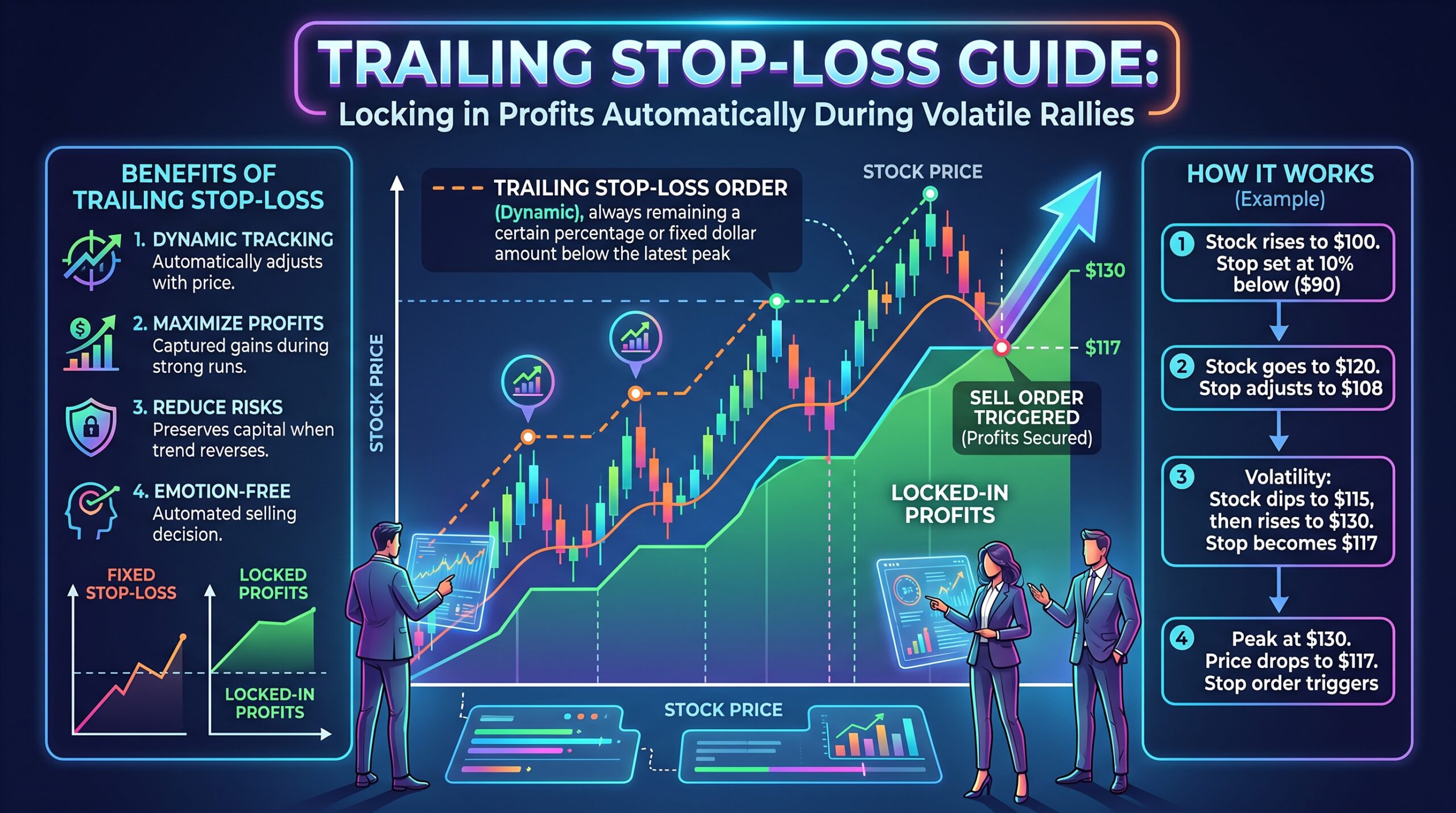
A trailing stop-loss is the ultimate solution to this common pain point. Instead of a static exit point that stays fixed at your entry price, a trailing stop is dynamic—it “trails” the market price as it moves in your favor, locking in higher profit levels automatically. If you are trading high-beta assets like crypto, mastering this tool is not just an advantage; it is a prerequisite for professional survival.
The Mechanics of Dynamic Profit Protection
Unlike a standard stop-loss that remains static, a trailing stop-loss recalculates its trigger level based on the most favorable price achieved during the life of the trade. When you open a long position, your trailing stop sits at a set distance below the current market price. As the asset climbs, the stop-loss moves up in tandem, maintaining that specific gap.
Expert Insight: Think of the trailing stop as a “ratchet” mechanism. If the asset price drops, the stop stays firm—it never moves backward. This allows you to “breathe” with the market during a rally, staying in the trade as long as the momentum continues, while ensuring that if a sharp reversal hits, your exit is triggered instantly at a much better price than your original entry.
Configuring Your Trailing Offset
The most critical decision you will make when setting this up is the “trailing offset.” This is the percentage or absolute amount you allow the price to retrace before your order triggers. If you set this too tight, normal market “noise” will stop you out prematurely. If you set it too wide, you risk giving back too much of your realized gains before the exit occurs.
Personal Example: I once set a 2% trailing stop on a volatile altcoin that was currently in a parabolic breakout. Because the asset was moving 5% in minutes, I was stopped out within ten minutes of the rally starting. I learned that for high-volatility assets, you have to be more patient. Now, I observe the asset’s typical “swing” size—if it normally dips 5-8% during a trend, my trailing stop needs to be at least 10% to survive the volatility while still protecting my profit.
Integrating Technical Indicators for Better Exits
Relying purely on a percentage-based trail is good, but combining it with technical analysis makes it world-class. Many pro traders use the Average True Range (ATR) indicator to define their trailing distance. By using a multiple of the ATR, you ensure your exit strategy adapts to the current volatility of the market rather than being a “one size fits all” percentage.
Expert Insight: If the market is calm, your trailing stop should be tighter. If the market is entering a high-volatility frenzy, widen your stop using an indicator-based approach. This “adaptive” logic prevents you from being “whipsawed” out of a winning trade during a brief, temporary dip that is actually just a healthy consolidation.
Common Pitfalls and Risk Awareness
It is important to remember that a trailing stop is not a magic shield against every market event. “Gap risk” is a real danger—if a massive news event happens and the price plummets instantly, your stop-loss will execute at the next available market price, which could be significantly worse than the trigger price you intended.
Expert Insight: Never use a trailing stop on a position larger than your risk appetite can handle. Even with automated protection, you must account for “slippage” during extreme events. If you are trading low-liquidity coins, be extra cautious; there simply might not be enough buyers at your stop price to fill your order without crashing the local price further.
The trailing stop-loss is one of the most powerful risk-management tools in a trader’s arsenal, acting as a personal “autopilot” for your profit-taking. By allowing you to stay in winning trends longer while automating your exit at the first sign of a reversal, it removes the emotional burden of market monitoring. Start small, test your offset distances in live markets, and master the art of letting your winners run until the market tells you it is time to leave.
FAQ
What is the difference between a stop-loss and a trailing stop?
A stop-loss is static and stays at one price until you move it. A trailing stop is dynamic and moves automatically with the market price, provided the price is moving in your favor.
Can I use a trailing stop on both long and short trades?
Yes. For long trades, the stop trails upward as price rises. For short trades, the stop trails downward as price falls.
What is “whipsaw” and how can I avoid it?
Whipsaw happens when your stop is set too close, and a minor price dip triggers it before the trend continues. Avoid this by setting a wider trailing offset that accounts for the asset’s normal daily price fluctuations.
Do I need to keep my trading terminal open for this to work?
On some exchanges, yes—if you are using a basic platform-side trailing stop, you may need to keep the browser open. However, most modern professional crypto exchanges offer server-side trailing orders that work even when you are logged off.