Retail portfolios are experiencing severe emotional exhaustion right now, caught completely off guard by sudden liquidations that have wiped out billions in paper wealth. You have likely watched your digital asset balances drift continuously downward over the last two quarters, wondering if the broader altcoin market is bound for a permanent structural collapse. The primary mistake independent market participants make is analyzing localized panic charts while completely failing to spot where global institutional money desks are aggressively placing their long-term limit orders.
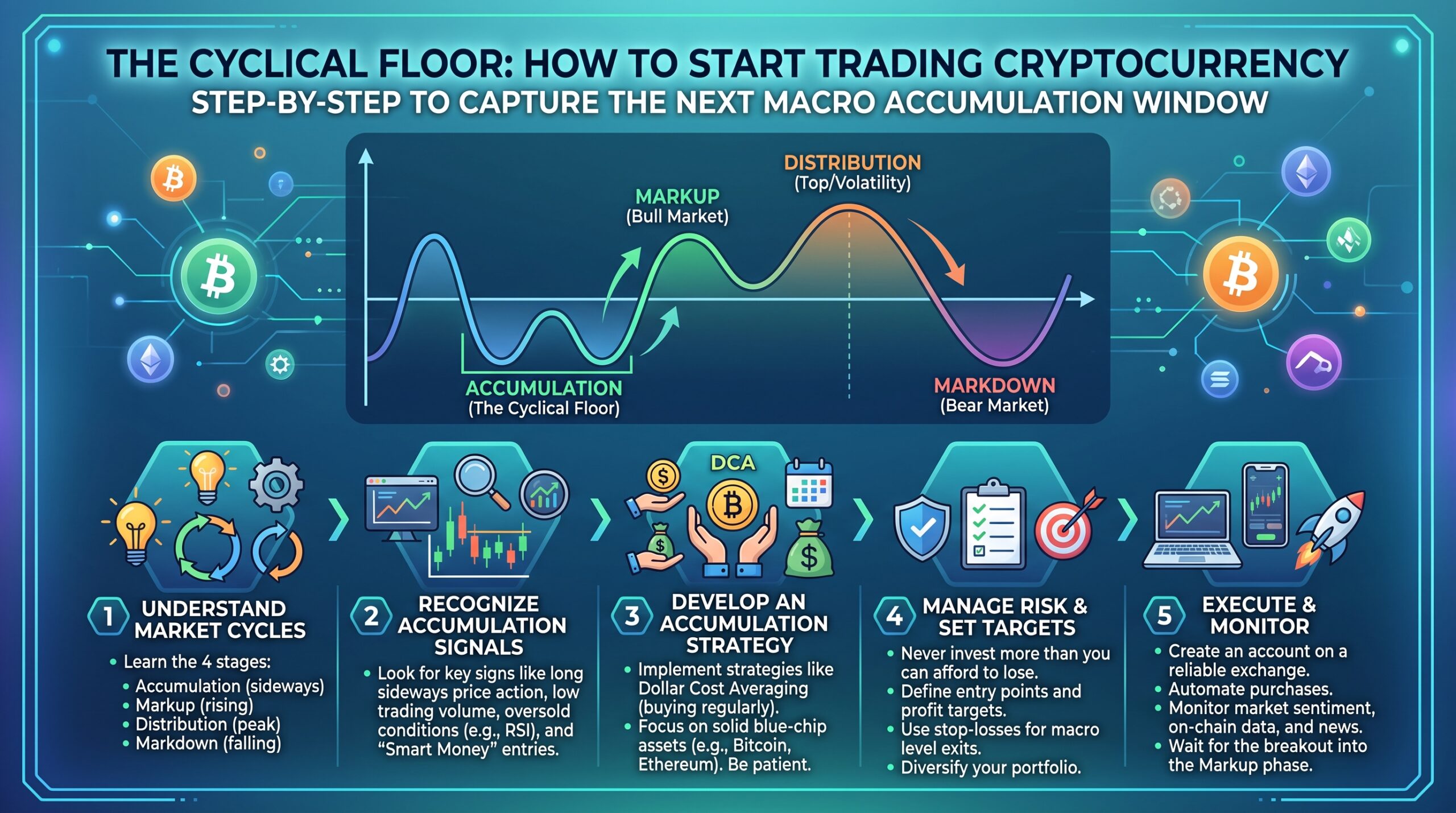
The underlying accumulation dynamics completely shifted as top-tier layer-one protocols hammered out a monumental macro support level. Following a heavy mid-year shakeout driven by restrictive global monetary forecasts, prominent blue chips like XRP and ETH have hit a critical low, creating what veteran fund managers identify as a highly rare structural asymmetry. This localized market capitulation is merely the tip of the iceberg—a 2026 Wall Street price bombshell is suddenly hurtling toward Bitcoin and crypto as institutional liquidity networks prepare to absorb decentralized infrastructure at deep cyclical discounts. If you want to position your capital safely to seize the next 300% asset growth opportunity before retail sentiment flips bullish, you must learn how to start trading cryptocurrency step by step using strict risk-mitigation rails.
Establish On-Ramps with Heavily Insured Custodial Gateways
When major crypto networks retest their multi-year macro floors, the absolute worst thing you can do is chase high-risk, unregulated off-shore trading counters promising zero trading overhead. The launch of independent non-profit initiatives like Ethereum Institutional proves that legacy financial networks are building highly standardized, bank-grade compliance infrastructure to handle on-chain capital allocation. For retail investors looking to construct a resilient long-term portfolio, matching this institutional security posture is your absolute baseline.
Your very first step is to open a trading account on a prominent, state-registered digital asset exchange that features comprehensive compliance certifications and third-party verified proof-of-reserves. Ensure your selected gateway provides direct banking integration via secure Automated Clearing House (ACH) networks and maintains segregated user capital accounts. By keeping your fiat-to-crypto execution contained within a transparent, heavily audited perimeter, you completely eliminate the counterparty structural risk that routinely destroys casual market participants.
Engineer an Unshakable Accumulation Bracket Using Capital Tranches
The core psychological trap when trying to capture a massive 300% growth cycle is trying to perfectly time the absolute market bottom on a single afternoon. When assets reach critical multi-month support lows, market makers purposefully manufacture volatile downside sweeps to shake loose leverage positions and trigger retail stop-loss orders. Chasing every individual hourly price wick with your entire investable net worth will quickly lead to severe financial distress and emotional trading mistakes.
We must replicate institutional trade execution by utilizing a highly disciplined capital tranches framework. Take your total designated digital asset investment pool and divide it into six to eight equal financial portions deployed over an extended weekly schedule. This mechanical dollar-cost averaging strategy systematically removes destructive emotions from your financial execution, automatically picking up cheap spot positions during sharp flash crashes while protecting your total cash reserve.
Concentrate Portfolio Weight on Battle-Tested Institutional Rails
The upcoming expansion cycle will be defined by rigorous fundamental utility, meaning that speculative low-cap altcoins completely lacking real-world infrastructure integration will likely face permanent obsolescence. Global banking institutions are funneling vast amounts of capital exclusively into networks like Ethereum for decentralized application smart contracts, and Ripple’s ledger for cross-border institutional remittance frameworks. These foundational protocols are capturing massive market share because they act as the primary structural pipelines for the burgeoning real-world asset tokenization industry.
When selecting assets to fill your long-term portfolio brackets, tilt your exposure heavily toward these highly liquid, enterprise-validated layer-one networks. Treat these premier digital assets exactly like foundational blue-chip equities or broad technology index funds inside a traditional retirement account. They command the highest developer density and deepest global liquidity, making them the direct structural beneficiaries of passive institutional inflows when macro markets eventually reverse.
Guard Realized Capital Accumulation via Offline Private Storage

While legacy investment advisors utilize heavily regulated exchange-traded funds to safely wrap digital asset exposure for institutional clients, independent retail traders must understand the fundamental rules of cryptographic custody. If you buy spot assets directly on a centralized trading interface and leave them sitting permanently on the exchange, you do not technically own those assets; you merely possess an unbacked claim on the platform’s internal corporate spreadsheet ledger.
The absolute moment your accumulated digital currency balance reaches a value that would cause you financial pain to lose, you must take absolute personal custody of those funds. Move your spot assets completely off the exchange and onto a dedicated physical hardware wallet, which permanently isolates your private cryptographic keys from internet-connected networks. True professional trading means using centralized platforms strictly as an execution machine, while preserving your multi-generational wealth within a secure, offline environment.
FAQ
Why did XRP and ETH hit a critical low in mid-2026?
The recent price contraction was heavily driven by a broader macroeconomic shift, including an updated Bank of America forecast pointing toward three consecutive interest rate hikes following a hot PCE inflation reading. This macro risk-off sentiment sparked massive liquidations across all risk assets, forcing premier altcoins down to major long-term structural support floors.
What is the primary catalyst driving the next 300% crypto growth cycle?
The primary driver is the rapid institutional transition toward real-world asset (RWA) tokenization and the commercial deployment of cross-border settlement rails. As clearing houses and asset management giants move multi-trillion-dollar security structures onto public block space, organic network transaction demand is expected to significantly outpace circulating token supply curves.
How do I protect my long-term trading capital from unexpected exchange halts?
The single most effective defense against platform liquidity issues is ensuring that you never use an exchange as a personal bank account. Utilize your centralized trading dashboard strictly to execute your buying tranches, and instantly transfer your spot assets to an offline non-custodial hardware wallet.