Retail day traders are suffering from severe market fatigue right now, watching speculative meme assets bleed out while wondering if the broader digital asset market is running out of steam. You have likely watched your portfolio fluctuate wildly over the last few quarters, leaving you paralyzed and unsure when to safely deploy fresh capital. The fundamental mistake most independent investors make is looking at basic retail charts while completely ignoring the structural shift happening behind the scenes on Wall Street.
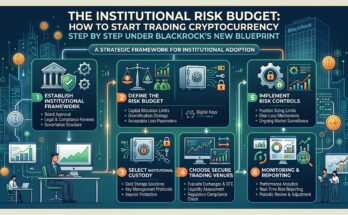
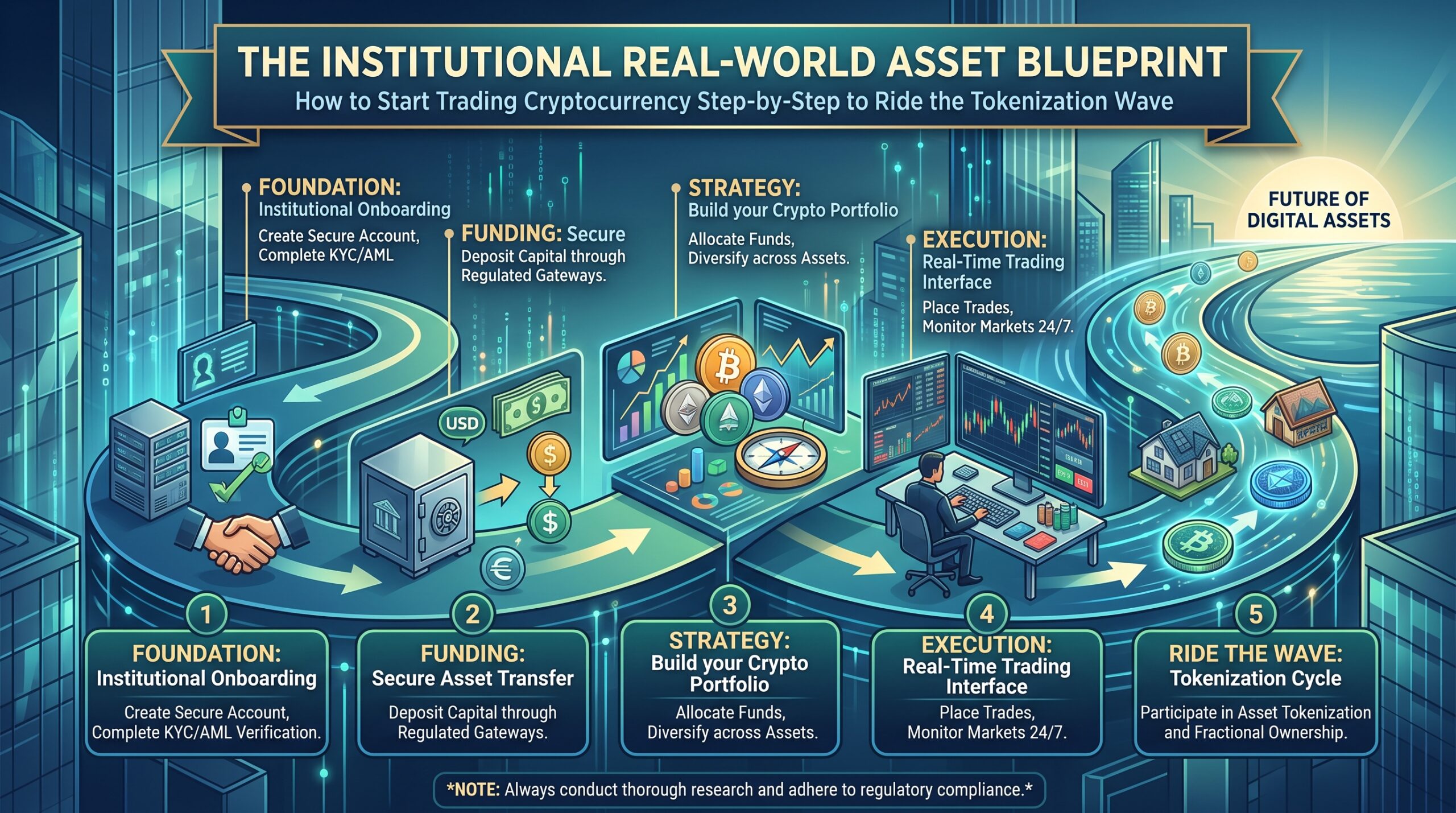
The paradigm for utility-driven digital assets completely changed following a monumental announcement from global market infrastructure leaders. The Depository Trust & Clearing Corporation (DTCC), which handles the post-trade clearing and settlement for a jaw-dropping $114 trillion in traditional securities, has officially announced plans to link its upcoming tokenization platform to the Stellar network. This multi-trillion-dollar integration is merely the tip of the iceberg—a 2026 Wall Street price bombshell is suddenly hurtling toward Bitcoin and crypto as real-world asset (RWA) tokenization moves from abstract concept to live production. If you want to position your capital safely before live assets officially hit the network in the first half of 2027, you must learn how to start trading cryptocurrency step by step using strict enterprise-grade rules.
Establish Your Account on a Tier-One Compliant Fiat Gateway
When institutional giants like the DTCC select a public blockchain, they do so based on rigorous evaluation of risk management and built-in regulatory workflows. The selection of Stellar over other public ledgers was heavily driven by protocol-level compliance features, such as native asset clawback capabilities that allow heavily regulated entities to recover assets under specific legal conditions. For retail market participants, this underscores a critical rule: you must never trade on unverified, off-shore platforms that ignore local compliance standards.
Your absolute first step is to open a trading account on a prominent, state-registered digital asset exchange or a highly regulated brokerage firm. Ensure the venue you choose features deep liquidity for corporate-facing assets, transparent third-party proof-of-reserves audits, and seamless fiat banking integrations via automated clearing house (ACH) networks. By trading within a fully compliant, audited perimeter, you protect your capital from the structural counterparty risks that routinely wipe out casual investors chasing unverified platforms.
Mathematically Map a Diversified Capital Allocation Plan
The temptation for most retail investors learning how to trade is to throw their entire net worth into a single asset after a major news announcement. When the DTCC deal broke, the native Stellar token (XLM) printed a massive green candle, surging by over 14% as global trading volume exploded by 400% in a single day. However, chasing sudden vertical green candles without an underlying plan is an express ticket to portfolio drawdown.
We must approach asset accumulation with the exact same calculated patience displayed by institutional trading desks. Isolate a specific, disciplined portion of your overall investment portfolio—such as 5% to 10%—for innovation assets like utility-driven layer-one networks. Once your budget is defined, divide that capital pool into equal tranches to accumulate your positions over several weeks or months, which naturally smooths out your global cost basis during short-term market corrections.
Prioritize Networks Built for the Regulated Institutional Perimeter
The multi-trillion-dollar tokenization migration proves that the long-term winners of the digital asset landscape will be networks with real-world financial utility. The DTCC and the Stellar Development Foundation are currently evaluating highly liquid, low-risk asset classes for on-chain deployment, including tokenized constituents of the Russell 1000, major index ETFs, and short-term U.S. Treasury bills.
When configuring your personal portfolio, tilt your long-term spot allocations heavily toward layer-one networks that possess established enterprise track records, low transactional overhead, and sub-six-second transaction finality. Focus on networks that act as foundational structural infrastructure for global remittance, tokenized liquidity, and national digital economies. This ensures your capital rests in utility-backed assets that benefit from organic transaction demand, rather than speculative tokens that lack underlying economic models.
Move Technical Execution Profits into Non-Custodial Cold Storage
While traditional financial firms utilize heavily guarded institutional vaults to secure tokenized securities on-chain, independent retail traders have unique access to absolute self-sovereignty. If you leave your acquired digital assets sitting permanently on a centralized trading exchange interface, you do not technically own those assets; you merely hold an unbacked claim on the platform’s internal spreadsheet ledger.
The moment your accumulated crypto balance scales past an amount that would cause you genuine financial pain to lose, you must transition those funds off the exchange. Move your assets onto a dedicated physical hardware wallet, which permanently isolates your private cryptographic keys from internet-connected computers and malicious software exploits. True professional trading means utilizing centralized platforms strictly for efficient trade execution, while maintaining absolute personal ownership over your long-term wealth assets.
FAQ
What does the DTCC tokenization deal mean for the Stellar network?
The partnership enables the tokenization of assets custodied by The Depository Trust Company (DTC) directly onto Stellar’s public blockchain. This brings real-world financial volume—ranging from ETFs to U.S. Treasuries—onto public rails, validating the network’s high-throughput architecture and compliance-minded protocol design.
When are live tokenized assets expected to go active under this service?
Following structural groundwork laid down via an SEC No-Action Letter, the DTCC and the Stellar Development Foundation have targeted the first half of 2027 for live tokenized securities to officially become available to market participants on the network.
What are the main benefits of moving traditional assets onto blockchain rails?
Tokenizing traditional real-world assets enables twenty-four-seven extended trading hours, significantly faster post-trade settlement times (moving from days to minutes), greater cross-border asset mobility, and a massive reduction in middleman reconciliation costs.