
You have likely noticed that the crypto market feels like a giant, repeating feedback loop. We have all seen it: a period of absolute boredom followed by a vertical surge that makes everyone a “genius,” only for the gravity of a crash to bring everyone back to earth. If you are trying to trade these moves based on charts alone, you are missing the heartbeat of the market. The cycle isn’t just about price; it is about the emotional temperature of the people holding those assets.
When you understand the four distinct phases of a cycle—Accumulation, Markup, Distribution, and Markdown—you stop fighting the market and start anticipating it. Most traders get wiped out because they do the exact opposite of what the phase requires. They panic-sell during the bottoming-out phase and FOMO-buy at the absolute peak. Let’s break down how to read the psychological rhythm of the market so you can stay one step ahead.
The Accumulation Phase: The Art of Quiet Persistence
The accumulation phase is the “boring” part of the cycle that most traders hate. It happens after a brutal bear market when the weak hands have been shaken out and prices finally stop making new lows. You won’t see headlines about “new highs” here; instead, you will see headlines about how “crypto is dead” or “regulators are finally winning.”
Expert Insight: This is where professional money accumulates. If you see price action becoming “flat” and trading volume drying up, you are likely in the accumulation zone. The biggest mistake is to get bored and walk away. This is the time to build your core positions, not when the media is screaming about a bull run. If you are patient enough to wait here, you are already ahead of 90% of the market.
The Markup Phase: Riding the Wave of Optimism
The markup phase—or the bull market—is where the fear of losing money is replaced by the fear of missing out (FOMO). Prices move higher at an increasing rate, and pullbacks are suddenly treated as “buying opportunities” rather than warning signs. As the trend becomes visible, new participants flood in, and volume explodes.
Personal Example: I remember the last major markup phase, where my social feed went from silent to constant noise in just a few weeks. The key to surviving this without getting reckless is a “profit-taking plan.” I divide my assets into buckets: a “core hold” that I don’t touch, and a “swing bucket” where I systematically take profits at predefined psychological resistance levels. It keeps me grounded when the euphoria hits.
The Distribution Phase: When Greed Peaks
Distribution is the most dangerous part of the cycle, and it is almost invisible to the untrained eye. This is where the “smart money” is quietly exiting their positions into the hands of retail buyers who are finally “all in” because they’ve seen the price climb for months. Supply and demand reach an equilibrium here, but it’s a fragile one.
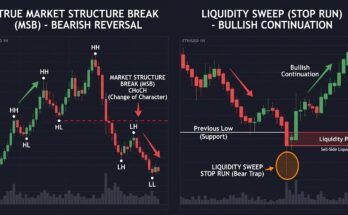
Expert Insight: Look for “exhaustion” in the price action. When an asset hits a new high but can’t sustain it, and then retreats back to support, that’s a distribution signal. If you see the price failing to set new highs despite massive news or hype, the distribution phase has likely begun. Sell into the strength, not the panic.
The Markdown Phase: Preparing for the Reset
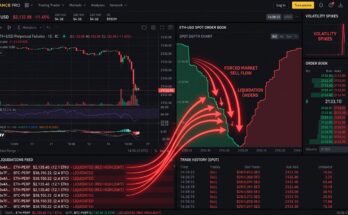
The markdown phase, or the “bear market,” is where pessimism takes over. It begins when supply finally overwhelms demand, leading to a cascade of liquidations. It is the most painful period, but it is also the most necessary. It washes away the leverage and the projects that had no real utility, creating the blank slate required for the next accumulation phase to begin.
Personal Example: During the last markdown phase, I found it helpful to stop checking my portfolio value entirely. I switched my focus to “network growth” metrics instead. If the tech was still being built and the developers were still active, I knew the cycle would eventually turn. Keeping my eyes on the fundamentals helped me avoid the emotional trauma of the price chart.

The market doesn’t move randomly; it moves in waves of human emotion. By identifying which phase you are in—whether it’s the quiet buildup of accumulation or the frantic peak of distribution—you can adjust your strategy from “guessing” to “positioning.” Stop chasing every green candle and start playing the cycle. The market will always offer a new opportunity, but only if you have the capital and the mindset to be ready for it.
FAQ
How can I tell if a market is in accumulation or just dead?
Accumulation typically shows low volatility and “range-bound” price action after a long downtrend. If you see an asset consistently bouncing off a support level without breaking lower, it’s a strong sign that buyers are defending the floor.
Is it possible to skip a phase in the cycle?
Technically, no. Markets are driven by supply and demand, and those two forces must reach a balance (distribution) before a reversal (markdown) can occur. However, news events can cause these phases to happen much faster than in historical cycles.
How do I manage the “FOMO” during the markup phase?
Always have a pre-defined “exit strategy.” When you feel the urge to buy because “the price is going to the moon,” look at your plan. If your plan says to take profit at a certain level, stick to it. Discipline is the only cure for FOMO.
Why does the Bitcoin halving influence these cycles?
The halving reduces the new supply of Bitcoin, creating a “supply shock.” Historically, this reduction in new supply has acted as a catalyst for the transition from accumulation to markup, though macroeconomic conditions also play a huge role.