You have likely watched the market react with violent swings every time a Federal Reserve official speaks. We have all been there. You see a headline about “Quantitative Tightening” (QT) and your portfolio suddenly dips, or you hear a whisper of a policy pause and the charts turn green. If you are trying to navigate the crypto landscape without understanding how the Fed’s “balance sheet mechanics” work, you are effectively trading blind.
When the Fed pauses its tightening cycle, it isn’t just a minor administrative detail; it is the equivalent of the central bank taking its foot off the brake of the global economy. For crypto, which acts as the ultimate “high-beta” risk asset, this transition is the signal the market has been waiting for. Let’s strip away the technical jargon and look at how these policy shifts actually move the needle on your digital asset holdings.
The Liquidity Tap: What Happens When QT Stops
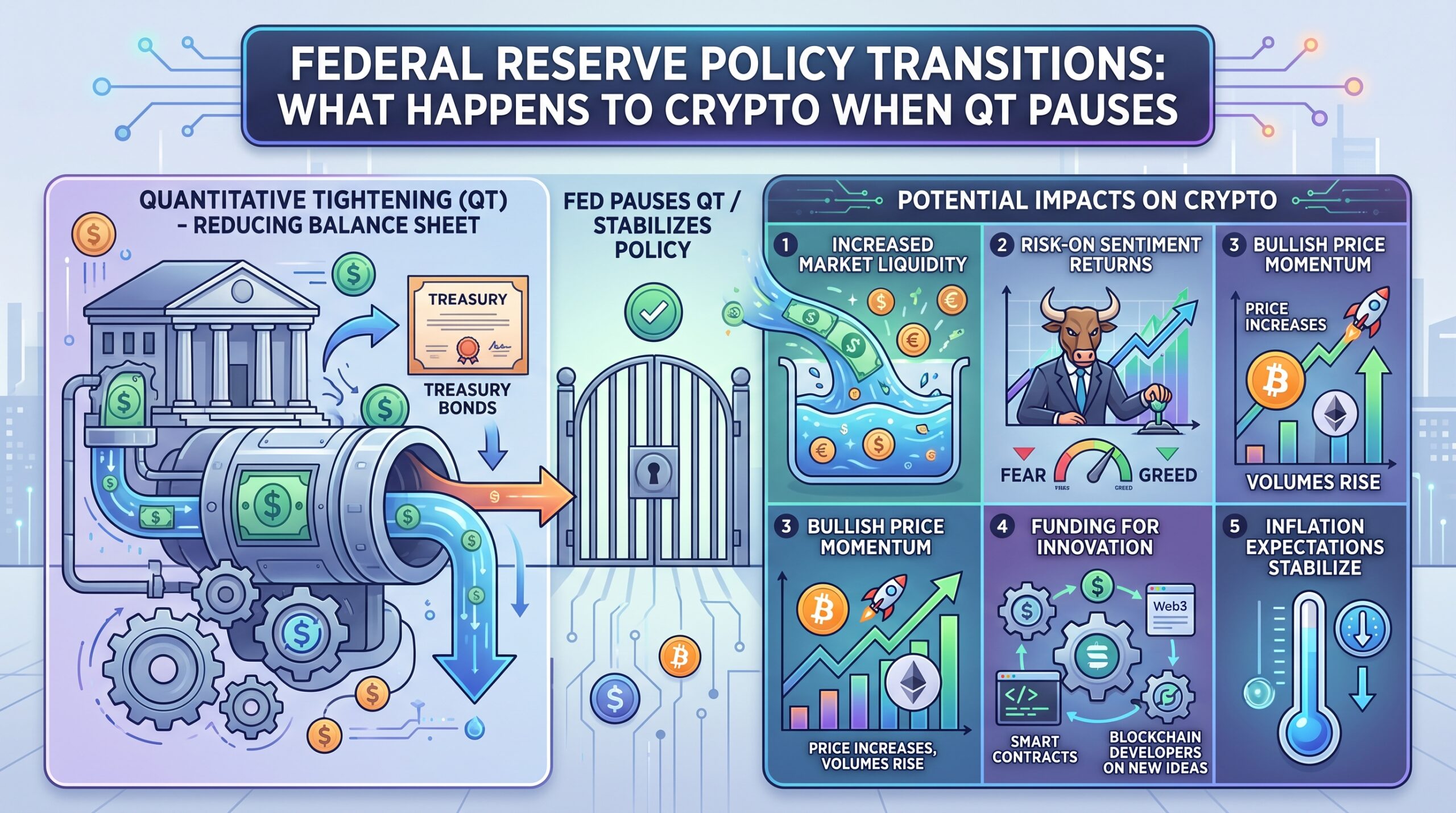
Quantitative Tightening is essentially the process of draining liquidity from the financial system. By allowing bonds to mature without reinvestment, the Fed reduces the supply of dollars circulating in the market. When this process pauses, the “drain” stops. Suddenly, the relentless upward pressure on borrowing costs eases, and the surplus of capital begins looking for a home—often finding its way into speculative, high-growth assets like Bitcoin and Ethereum.
Expert Insight: Don’t wait for the official press release to see the impact. Markets are “forward-looking engines.” By the time the Fed confirms a pause, the smart money has often already repositioned. Watch the “MOVE Index” or Treasury yields; if these begin to soften, it’s a leading indicator that the liquidity environment is becoming more favorable for risk-on assets, even before the policy shift is cemented.
Why Risk-On Assets Thrive in a Policy “Neutral” Zone
When the Fed transitions from tightening to a pause, it creates a “neutral” environment. During the peak of QT, investors flee to the safety of short-term government bonds because they offer decent yields with zero risk. However, when the Fed hits the pause button, the opportunity cost of holding cash or bonds rises. Investors start feeling the urge to chase higher returns again.
Personal Example: In previous cycles, I’ve noticed that as soon as the “pause” talk gains traction in the media, capital rotates out of cash equivalents and into tech-heavy portfolios and digital assets. It’s like a dam breaking. You don’t need a massive injection of new money for prices to spike; you just need the existing capital to stop fleeing to safety.
The “Invisible” Impact on Crypto Market Structure
Policy transitions don’t just change the price; they change the leverage of the market. When QT is active, borrowing is expensive and leverage is dangerous. When the Fed pauses, the cost of capital drops. Traders begin to feel more confident in taking on speculative positions, which increases volume, tightens spreads, and allows liquidity to return to the altcoin markets that usually get “frozen” during tightening phases.
Expert Insight: Watch the correlation between crypto and the U.S. Dollar Index (DXY). When QT pauses, the DXY often loses its upward momentum. As the dollar weakens, crypto assets—which are priced in dollars—naturally become more attractive. If you see the DXY topping out while the Fed talks about a pause, that is your high-probability setup for a long position.
Navigating the “Fake Out” Risks
Not every pause is a green light. Sometimes, the Fed pauses because the economy is on the verge of a recession. In those cases, the market doesn’t rally; it crashes because investors panic about a “hard landing.” Always look at the why behind the pause. If they are pausing because inflation is tamed, that is bullish for crypto. If they are pausing because the labor market is collapsing, that is a warning sign to scale back your risk.
Expert Insight: Look at the labor data alongside the Fed’s policy. If we get a “Goldilocks” scenario—soft inflation and stable employment—a Fed pause is the absolute best environment for a crypto breakout. If you see unemployment spiking during a pause, be ready for a “risk-off” move where everyone, including crypto traders, sells everything to hold cash.
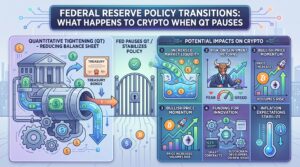
The Federal Reserve’s policy transition is the single most important macro-signal for your crypto portfolio. By recognizing that QT pauses represent a shift in the global cost of capital, you can move from a reactive trader to a proactive one. Stop guessing where the market will go next based on hype; follow the liquidity. When the central bank takes its foot off the brake, ensure your portfolio is positioned to catch the acceleration.
FAQ
Does a Fed pause guarantee a bull market?
No. A pause is just one piece of the puzzle. You also need investor sentiment, ETF inflows, and adoption trends to align. A pause sets the stage, but it doesn’t guarantee the performance.
How do I track Fed policy effectively?
Follow the “Fed Dot Plot” and the minutes from the Federal Open Market Committee (FOMC) meetings. These documents provide the most granular view of what policymakers are actually thinking.
Why does crypto react more violently to Fed news than stocks?
Crypto is a “high-beta” asset, meaning it amplifies the volatility of the broader market. When liquidity is tight, crypto is the first thing sold; when liquidity returns, it is often the first thing bought back.
What should I do if the Fed pivots while the economy is in a recession?
Scale back your risk. A “pivot” to support a failing economy is often accompanied by panic and mass liquidation. Don’t mistake a central bank’s emergency response for a “buy the dip” signal.